
Why Water Contamination Classification Matters
When water floods your home, the immediate impulse is simply to remove it. However, the water’s biological and chemical composition dictates the entire restoration methodology: the personal protective equipment (PPE) required for technicians, which building materials can be salvaged versus discarded, containment protocols, and the sanitization standards necessary to ensure your home is biologically safe for occupancy.
The Institute of Inspection, Cleaning and Restoration Certification (IICRC)—the standard-setting body for the disaster recovery industry—defines these parameters in the IICRC S500 Standard and Reference Guide for Professional Water Damage Restoration. Understanding these categories empowers homeowners to make informed safety and restoration decisions.
Category 1: Clean Water
Clean water originates from a sanitary source and does not pose a substantial risk to human health through dermal contact, ingestion, or inhalation at the time of the loss.
Common Sources of Category 1 Water:
- Broken domestic copper, PEX, or CPVC pressurized supply lines
- Ruptured flexible braided supply hoses on sinks or toilets before entering the fixture
- Overflowing bathtub or sink faucets with clean tap water
- Melting ice or leaking refrigerator water dispenser lines
- Rainwater entering directly through an intact roof or window opening without contacting building contaminants
Restoration Implications:
Category 1 losses represent the most straightforward restoration scenario. If extraction begins promptly, porous materials—such as carpet, underlayment, drywall, and structural framing—can frequently be dried in place using commercial LGR dehumidifiers and high-velocity air movers without requiring demolition or replacement.
Category 2: Gray Water
Gray water contains significant chemical, biological, or physical contamination and has the potential to cause discomfort or illness if exposed to or consumed by humans. It often contains dissolved detergents, organic matter, microbial nutrients, or skin cells.
Common Sources of Category 2 Water:
- Washing machine overflow or discharge hose disconnection containing laundry detergent and soiled water
- Dishwasher overflow or drain pump failure with wash water and food debris
- Toilet bowl overflow containing urine without feces
- Water softener brine tank overflow or discharge line failure with high salt and mineral concentrations
- Aquarium leaks or waterbed punctures containing biological growth
- Sump pump failures releasing stagnant pit water
Restoration Implications:
Category 2 losses require enhanced safety and sanitization. Porous cushioning materials, such as carpet padding, readily absorb and hold organic contaminants and typically must be removed and discarded. Carpet fibers, tile, and concrete can often be saved if thoroughly treated with EPA-registered antimicrobial agents during extraction. Technicians utilize protective gloves, boots, and eye protection during cleanup.
Category 3: Black Water (Contaminated Water)
Black water is grossly unsanitary and contains harmful pathogenic agents, dangerous bacteria, fungal spores, viruses, toxic chemical residues, or heavy metals. Ingestion or contact with black water presents serious health hazards to building occupants and domestic pets.
Common Sources of Category 3 Water:
- Sewage backups originating from municipal sewer mains or private septic tanks
- Toilet bowl overflows containing fecal matter
- Rising floodwaters from coastal storm surge, overflowing rivers, streams, or surface road runoff. See our flood cleanup services.
- Wind-driven hurricane water that has washed across contaminated ground surfaces before entering the home
- Any Category 1 or Category 2 water loss that has remained stagnant and unextracted for more than 48 to 72 hours
Restoration Implications:
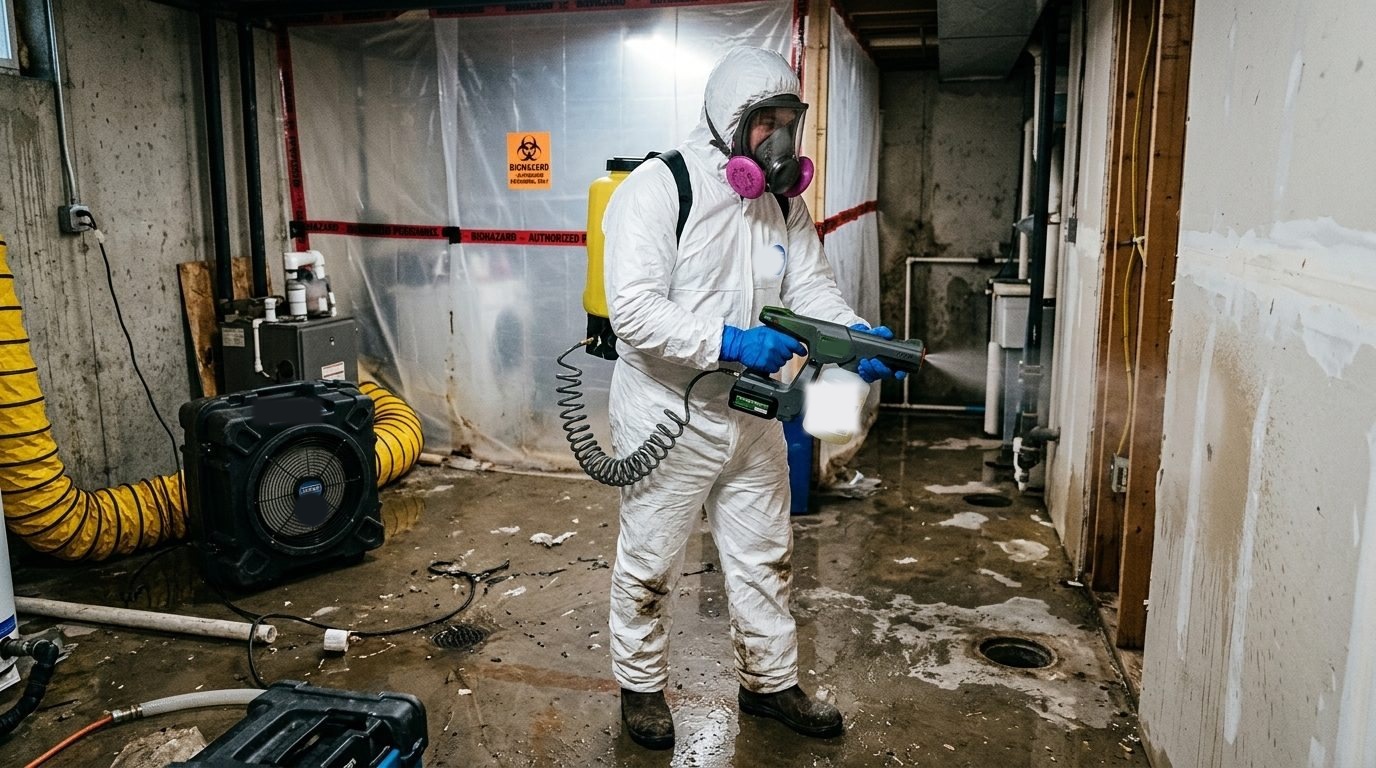
Category 3 water damage requires comprehensive biohazard containment protocols. Technicians wear full personal protective equipment, including respirators (N95 or half-face HEPA), impervious Tyvek suits, and heavy chemical gloves. Saturated porous materials—including carpet, padding, mattresses, upholstered furniture, laminate flooring, and drywall below the waterline—must be cut out, bagged, and disposed of according to health regulations. Structural studs and concrete slabs must be physically washed, biocidally treated, and dried under negative air pressure HEPA filtration.
The Critical Role of Time and Environment in Florida
A fundamental principle of water damage restoration that homeowners must understand is that water categories are dynamic, not static:
A clean water pipe break (Category 1) will degrade into gray water (Category 2) within 24 to 48 hours, and can become black water (Category 3) within 48 to 72 hours when warm temperatures, humidity, and organic nutrients are present.
In Florida’s subtropical climate, ambient temperatures inside a home without power or air conditioning frequently exceed 80°F with relative humidity above 75%. Under these conditions, microorganisms proliferate exponentially. Saturated drywall paper, carpet backing, and wood framing provide abundant cellulose food sources. Bacteria multiply rapidly in standing water, quickly turning an initially clean plumbing leak into a hazardous biological loss if physical water extraction is delayed.
Safety Precautions by Category for Homeowners
| Water Category | Human Safety Risk | Recommended Homeowner Action |
|---|---|---|
| Category 1 (Clean) | Low risk within first 24 hours | Shut off source, elevate furniture, call extraction quickly |
| Category 2 (Gray) | Moderate: skin irritation, stomach distress if ingested | Keep children & pets away, wear rubber boots, avoid splashing |
| Category 3 (Black) | High: serious bacterial infections, respiratory illness | Evacuate affected areas, do not run AC fans, call professionals |
Frequently Asked Questions About Water Contamination
Can I determine the water category just by looking at it?
No. Clear-looking water can harbor dangerous levels of bacteria, viral pathogens, or chemical dissolved solids. Conversely, water tinted yellow or brown by harmless soil or old carpet dye may be chemically non-hazardous. Restoration professionals evaluate the original source, path of travel, and elapsed time rather than visual clarity alone.
Why shouldn’t I run household fans on Category 2 or 3 water?
Standard household box fans create turbulent, uncontained airflow. If placed in an area with contaminated water or sewage, fans aerosolize bacteria, viruses, and fungal spores, blowing them into clean living rooms and heating/cooling ducts, contaminating your home’s indoor air quality. Professional drying of contaminated water utilizes negative air pressure containment and HEPA air scrubbers.
Does homeowners insurance cover sewage or floodwater cleanup?
Standard Florida homeowners insurance (HO-3) covers sudden interior plumbing leaks (Category 1 and 2), but frequently requires an optional “Water Backup & Sump Overflow” endorsement to cover municipal sewer backups. Rising outdoor floodwaters (coastal surge, overflowing bodies of water) are excluded from standard policies and require separate flood insurance through the National Flood Insurance Program (NFIP). Learn more in our Florida insurance water damage guide.
Need Water Extracted Safely From Your Property?
Our specialized extraction equipment removes water quickly and safely, applying certified containment and drying protocols for every category of loss.