
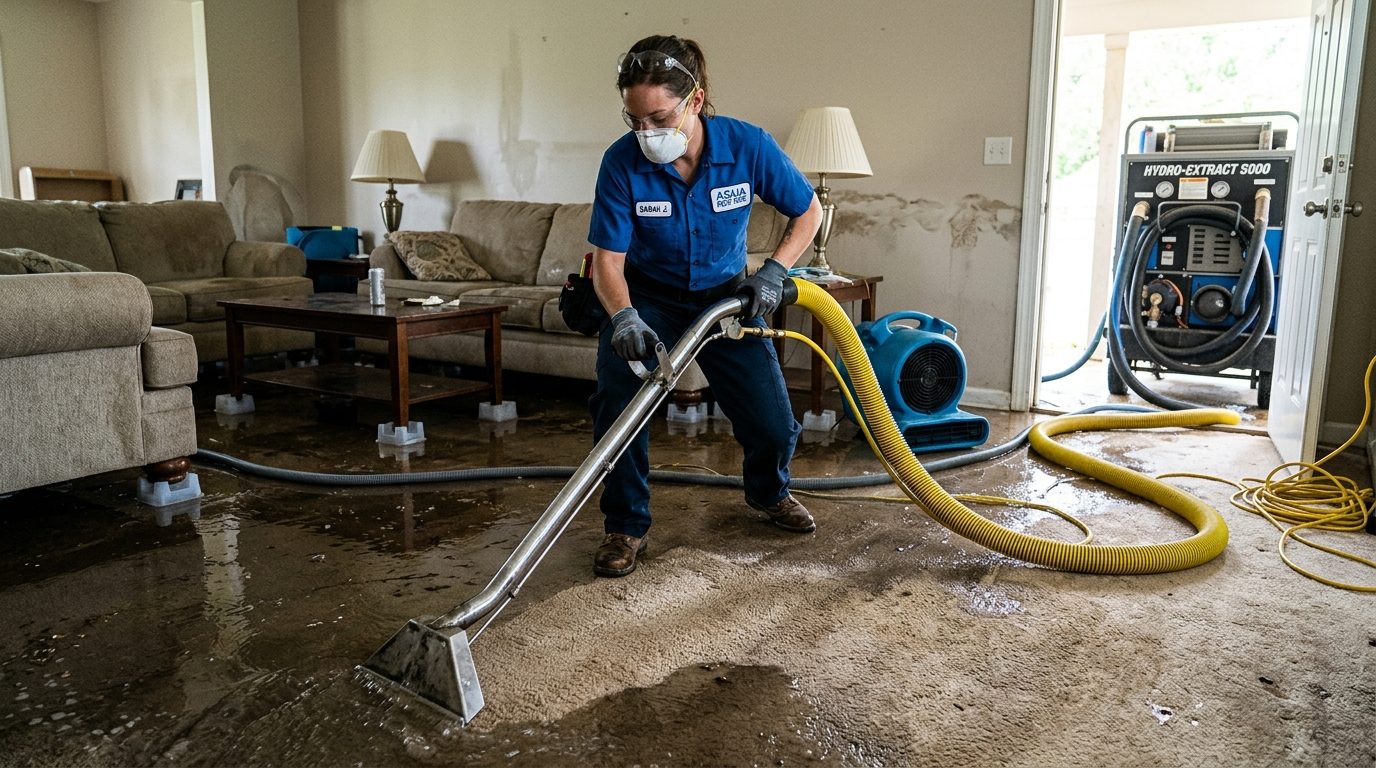
Stop the Source First
If it can be done safely, shut off the appliance and its water supply before moving items or beginning cleanup. Look beyond the visible puddle—dishwashers, washing machines, refrigerators, and supply lines can send water beneath cabinets, finished flooring, wall bases, and into adjoining rooms. Avoid operating the appliance again until the source of the leak is identified.
First Priorities
- Stop or isolate the source if you can do so safely.
- Avoid standing water around electrical equipment, outlets or cords.
- Protect people from slipping, falling ceiling material or contaminated water.
- Document the visible source and affected rooms when safe.
- Remove standing water and check where it migrated rather than drying only the visible surface.
Why This Type of Water Loss Is Easy to Underestimate
Appliance losses are often deceptive because the machine blocks access to the source area. A small visible puddle may represent a larger wet zone behind the appliance, under toe-kicks or beneath floating flooring.
Water follows gravity, seams, gaps and absorbent materials. It can wick upward in drywall, pass under baseboards, move beneath floating floors and collect in low areas. Effective mitigation requires two immediate steps: taking safe action to control moisture release, and thoroughly evaluating adjacent assemblies where water may have travelled.
Where the Water Commonly Goes
| Condition | Extraction / drying concern |
|---|---|
| Washing machine supply hose | Can release water rapidly and spread into hallways or adjacent rooms. |
| Dishwasher leak | Water may stay hidden under cabinetry and finished flooring. |
| Refrigerator / ice-maker line | Small leaks can continue unnoticed and wet drywall or flooring over time. |
| Appliance drain leak | Used water may contain soils or food residue, so source conditions matter before deciding what can be retained. |
Water Extraction and Drying Sequence
- Confirm that the source is stopped or controlled and identify whether the water may be contaminated.
- Extract liquid water from accessible surfaces and materials where appropriate.
- Check adjacent flooring, wall base, drywall, cabinets/closets and the room on the other side of affected walls when migration is possible.
- Set drying conditions for materials that are appropriate to retain.
- Recheck moisture and adjust the plan if a material is not responding or has deteriorated.
What Not to Do
- Do not assume a dry top surface means the layer underneath is dry.
- Do not place household fans in a sewage or outdoor-floodwater area before contamination is evaluated.
- Do not close the wall or reinstall baseboards/flooring over materials that are still wet.
- Do not make insurance-coverage assumptions before reviewing the actual policy and loss circumstances.
Source-Specific Inspection Map
The visible puddle is the starting point, not the boundary. For this type of loss, the inspection should deliberately include the following areas when they are present and safely accessible:
- Area directly beneath and behind the appliance
- Cabinet toe-kicks and side panels
- Floor seams and transition strips
- Wall base behind water connections
- Adjacent room or hallway if water crossed the doorway
Information to Give the Water-Damage Team
- What failed or where the water first appeared
- Whether the source is stopped and who repaired or isolated it
- Approximate time the problem started or was discovered
- Whether the water contacted waste, outdoor floodwater, chemicals or other contaminants
- Rooms affected and whether water crossed thresholds or reached a lower level
- Any flooring, cabinet, ceiling or electrical concerns already visible
When DIY Cleanup Stops Being a Good Fit
A few ounces of clean water on a hard surface is very different from water that reached porous materials or hidden assemblies. Professional help becomes more useful when the affected area is large, water migrated under flooring or into walls, contamination is possible, the ceiling is involved, electrical conditions are uncertain, or you cannot confirm that materials are actually drying.
Documentation Before Materials Are Removed
When conditions are safe, take wide room photos plus close views of the source, water line, damaged finishes and contents. This creates a factual record before extraction or removal changes the scene. Do not delay urgent source control or safety work simply to take more photographs.
Frequently Asked Questions
Can I clean up a small amount myself?
Small, clean-water spills can sometimes be handled by the property owner when electrical conditions are safe and materials can be dried promptly. Call for help when water has spread into porous materials, hidden spaces, multiple rooms, contaminated areas or when you cannot verify drying.
How do I know whether water is under the flooring?
Clues can include water at seams, edge swelling, soft spots, changes in sound underfoot, moisture readings and water emerging at perimeter gaps. A dry surface alone is not proof.
When should drywall be removed?
Removal depends on contamination, swelling, deterioration, insulation/cavity conditions and whether the assembly can be dried effectively. EPA guidance notes that intact drywall may sometimes be dried in place after clean-water damage, but damaged or contaminated materials may need removal.
Sources & Further Reading
- US EPA — Water Damage Cleanup and Mold Prevention Table: https://www.epa.gov/sites/default/files/2014-08/documents/table1.pdf
- US EPA — A Brief Guide to Mold, Moisture and Your Home: https://www.epa.gov/mold/brief-guide-mold-moisture-and-your-home
- UF/IFAS — Energy Efficient Homes: Air Conditioning: https://ask.ifas.ufl.edu/publication/FY1026