
Why Immediate Shutoff Is Your First Priority
Pressurized residential water in Spring Hill flows at 45 to 70 pounds per square inch (PSI). When a standard half-inch copper pipe or flexible braided supply line ruptures completely, it can release 10 to 20 gallons of water per minute—that is 600 to 1,200 gallons in a single hour. Every minute water continues escaping, it spreads further across your concrete slab, wicks higher into drywall, and penetrates beneath floor coverings.
Knowing where your shutoff valves are located and how to operate them before an emergency occurs is one of the most critical home maintenance skills for every Florida property owner.
Level 1: Local Fixture Shutoff Valves (Angle Stops)
If the leak is originating from a specific appliance or fixture, isolating that single unit stops the water immediately without shutting off water to the rest of your home:
- Toilets: Look directly beneath the left side of the toilet tank near the wall. You will find a small oval chrome handle attached to the wall pipe. Turn this handle clockwise until it stops completely. If the valve is stiff, grip it firmly with a cloth; do not force it violently with pliers if it feels brittle.
- Bathroom & Kitchen Sinks: Open the cabinet doors under the sink. You will see two valves: one for hot water (usually left) and one for cold (right). Turn both valves clockwise until fully closed.
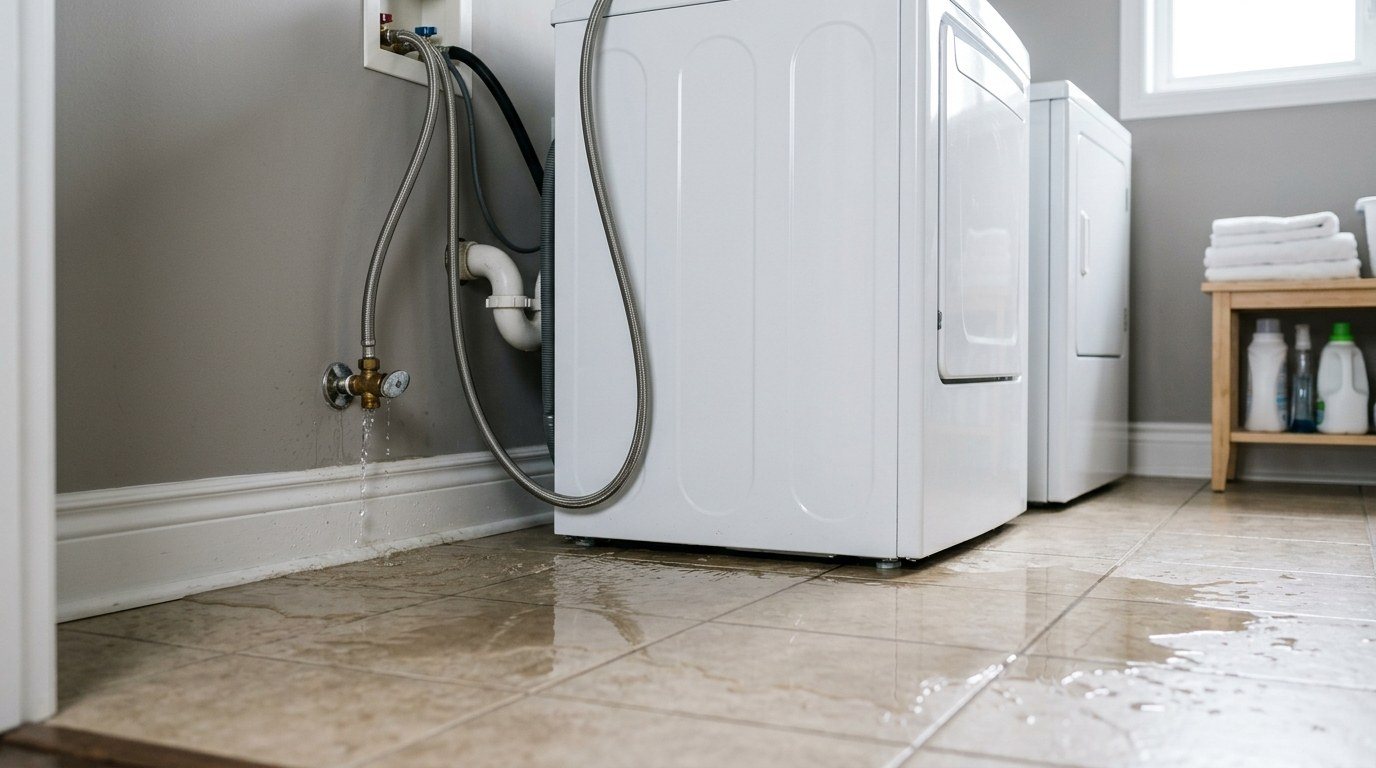
- Washing Machines: Pull the machine slightly away from the wall to access the recessed outlet box. You will see two valves—red (hot) and blue (cold)—or a single dual-shutoff lever. Turn both knobs clockwise, or flip the single red/blue lever firmly to the opposite side to isolate the machine.
- Water Heaters: Look at the top of the water heater tank. You will see a cold water inlet pipe equipped with a ball-valve lever or round gate-valve wheel. Turn the lever perpendicular to the pipe or turn the wheel clockwise until fully closed to stop incoming water.
Level 2: The Main House Water Shutoff Valve
If the leak is inside a wall cavity, ceiling, under the concrete slab, or coming from an unidentifiable source, you must shut off water to the entire property:
Where to Find Your Main House Valve in Spring Hill
In Florida slab-on-grade homes, the main shutoff valve is typically located in one of three standardized locations:
- Attached Garage: Near the front corner of the garage, often mounted along an exterior wall near the water heater or water softener loop.
- Exterior Wall Near the Front Hose Bib: Mounted on the exterior concrete block wall near the outdoor spigot at the front or side of the home. It is often covered by a plastic protective sleeve.
- Interior Utility / Laundry Room: In some older Spring Hill homes (34606), the main line enters through an interior laundry or utility closet near the garage access door.
How to Operate the Main Valve
- Ball Valve (Straight Lever Handle): This is the most common modern valve. When the valve is open, the lever handle runs parallel to the pipe. To shut it off, turn the lever one-quarter turn (90 degrees) so that it is perpendicular to the pipe.
- Gate Valve (Round Wheel Handle): Common in older homes. Turn the round wheel clockwise (to the right) multiple full turns until it seats tightly against the valve base. Do not overtighten once resistance is felt.
Level 3: The Street Meter Box (Curb Stop Valve)
If your main house valve is broken, stuck, leaking itself, or cannot be located, you can shut off water at the municipal meter box:
Locating the Meter Box
Walk to the front perimeter of your property near the street curb or sidewalk. Look for a rectangular plastic, concrete, or cast-iron box set flush with the grass or ground level, labeled “WATER” or “HERNANDO COUNTY UTILITIES.”
Operating the Curb Stop Valve
- Carefully lift the lid of the meter box using a screwdriver or pry bar. (Watch for spiders, frogs, or insects that frequently nest in meter boxes).
- Inside, you will see the round glass water meter dial and a heavy brass valve on the street side of the meter. The valve features an oblong brass flange or directional tab with two holes.
- Use a specialized T-shaped water meter key (available at local hardware stores) or a heavy adjustable wrench. Place the key slot over the brass flange and turn it one-quarter turn (90 degrees) clockwise until the hole on the turning tab aligns with the stationary hole on the valve body. When the holes line up, the water is completely shut off.
Critical Electrical Safety During a Leak
Water and electricity create an immediate, life-threatening shock hazard. Follow these strict precautions before stepping into pooled water:
- Never Step into Standing Water Near Outlets: If standing water has reached wall outlets, power strips, extension cords, or submerged appliances, keep completely out of the water.
- Shut Off Power at the Main Electrical Panel: If you can access your main electrical breaker panel from a dry location without walking through water, switch off the individual circuit breakers supplying the flooded rooms. If the area around the electrical panel itself is wet or damp, do not touch it—call your utility provider or emergency services immediately.
- Do Not Use Household Vacuums: Never attempt to remove standing water with an ordinary household vacuum cleaner. They are not insulated against electrical shock and will short-circuit, posing fire and electrocution hazards.
What to Do the Second the Water Stops Flowing
Once you have successfully stopped the water flow, take immediate steps to protect your property and establish your insurance claim:
- Relocate Dry Contents: Move dry furniture, rugs, paper files, clothing, and electronics out of the water path to unaffected rooms.
- Take Comprehensive Photos & Video: Photograph the point of failure, standing water depth, wet baseboards, swollen doors, and damaged personal belongings before anything is disturbed or discarded.
- Relieve Line Pressure: Open an exterior outdoor garden hose spigot to drain residual water and relieve pressure trapped in the home’s plumbing system.
- Call for Commercial Water Extraction: Removing standing water within hours is essential to prevent moisture from traveling under floor coverings and deep into concrete slabs. Call a professional water damage company immediately.
Frequently Asked Questions About Water Shutoffs
What if my shutoff valve is stuck and won’t turn?
Do not force a stuck valve with excessive leverage, as old brass or plastic stems can snap, creating a larger leak. Instead, spray a small amount of penetrating lubricant on the valve stem threads, wait two minutes, and attempt to turn it gently. If it still will not move, proceed directly to the street meter box.
How can I verify that the water is completely off?
After turning the main valve or meter curb stop, walk to a kitchen or bathroom sink and turn on the cold water faucet. Water should run for a few seconds as the pipes depressurize, then slow to a complete stop. You can also check the water meter dial; the red triangle or flow indicator wheel should be completely stationary.
Who do I call after I shut off the water?
You will need a licensed plumber to repair the broken pipe or fixture, and a professional water extraction company to extract pooled water and dry building materials. Review our guide on who to call first between a plumber and a water damage company.
Got the Water Shut Off? Now Get It Removed Fast
Our specialized extraction equipment removes standing water rapidly from floors and walls to prevent permanent structural decay and mold.