
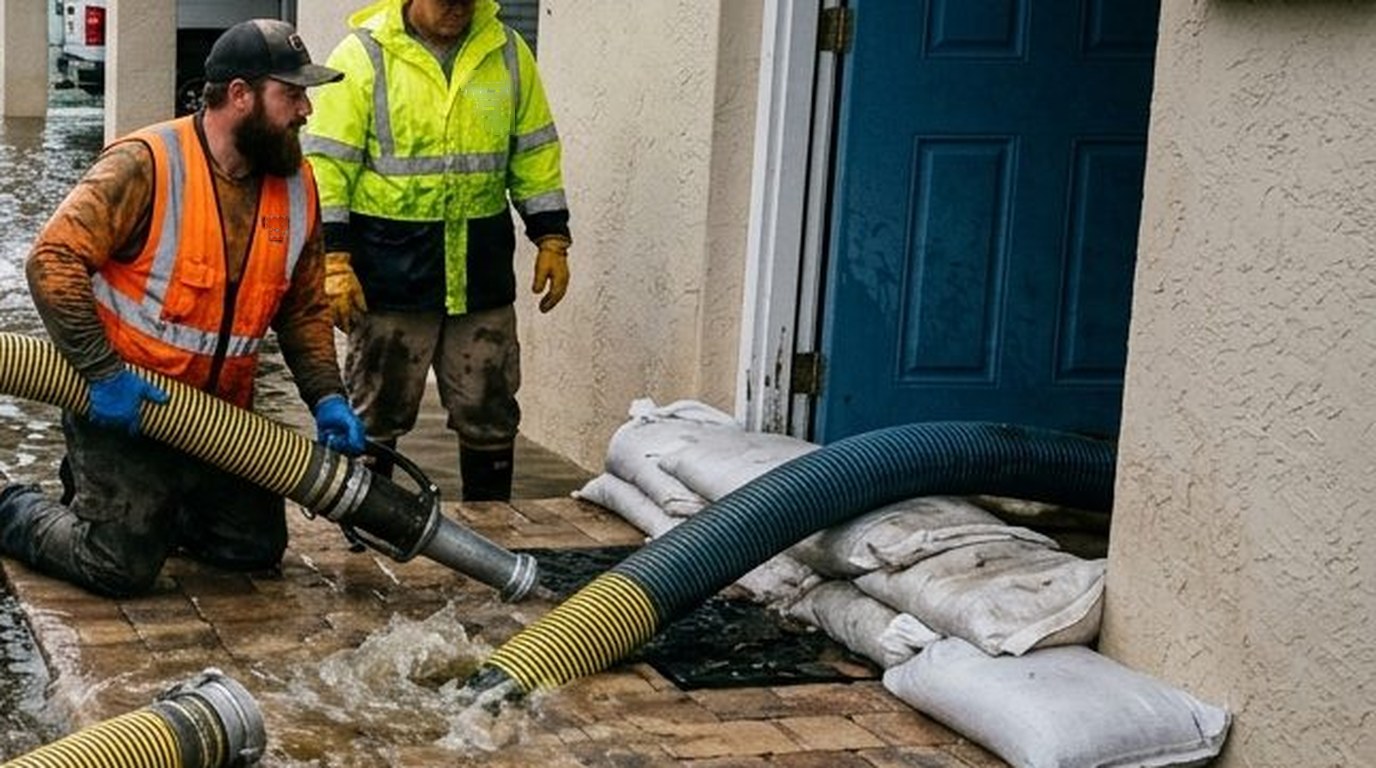
Water on the floor right now in Weeki Wachee Gardens?
- Shut off the primary water supply immediately at the fixture stop valve or the main water meter cutoff near your driveway or exterior utility entry.
- Check electrical hazards before stepping onto wet floors, especially in ground-level utility rooms, garages, or storage areas under stilt homes.
- Avoid using domestic household vacuums on pooled liquid; household vacuums create dangerous shock hazards and lack sanitary water filtration containment.
- Initiate professional water extraction before moisture migrates behind wall baseboards, into subfloors, and across structural concrete slabs.
Water Extraction in Weeki Wachee Gardens, FL
Weeki Wachee Gardens is a distinctive waterfront residential community situated along the winding Weeki Wachee River and an extensive network of spring-fed residential canals off Shoal Line Boulevard (CR 597) in western Hernando County (ZIP 34607). The community showcases diverse waterfront architecture: raised stilt residences, homes on pilings with ground-level storage enclosures, classic riverfront cottages, and concrete block slab homes positioned near water level.
Because Weeki Wachee Gardens is bordered by natural spring runs and the Gulf coastal transition, properties contend with an exceptionally high natural water table and elevated ambient river humidity year-round. When plumbing breaks, water heaters rupture, or storm water intrudes, indoor water losses cannot dry through natural ventilation alone. Dispatched directly from our Spring Hill service base at 3420 Deltona Blvd—only 10–12 minutes east—our teams deliver specialized water extraction in Weeki Wachee Gardens engineered for waterfront environments.
Common Water-Damage Situations We Handle in Riverfront Properties
Waterfront and canal residences in Weeki Wachee Gardens experience unique water mitigation challenges:
- Storm-Driven Water Intrusion & Heavy Coastal Rain: Severe convective summer storms push wind-driven rain past sliding glass patio doors, window jambs, and elevated deck interfaces. Review our storm water damage mitigation guidance.
- Ground-Level Enclosure & Garage Water Intrusion: Elevated stilt homes frequently have ground-level utility rooms, workshops, and garages built on concrete slab foundations. Heavy rain runoff or localized pooling can penetrate entry doors, requiring heavy-duty physical extraction.
- High Ambient River Humidity Retarding Drying: The immediate proximity of spring runs and river canals maintains elevated outdoor relative humidity. Commercial dehumidification is critical to draw moisture out of interior drywall and subfloors.
- Plumbing Supply Line & Fixture Failures: Under-sink flexible braided lines, water heater tanks, and washing machine supply hoses under constant municipal pressure can rupture suddenly, flooding living areas. Review our guide on burst pipe water damage.
- AC Condensate Drain Blockages: High summer temperatures require continuous air conditioning. Condensate lines that clog with algae cause drain pans to overflow into ceiling framing or utility closets. See our AC condensate leak response.
What Homeowners Should Do First
Taking prompt, careful steps during the initial hour of a water incident protects your home and personal property:
- Shut Off the Water Source: Turn the local chrome fixture valve clockwise, or close the main residential supply valve immediately. Consult practical techniques in our guide on how to shut off your water during a leak.
- Assess Electrical Safety: Never enter standing water where electrical appliances, cords, or submerged outlets are present. Disengage power to the affected zone from a dry area at your main panel.
- Elevate Furniture & Draperies: Place aluminum foil or plastic tabs under wooden furniture legs to stop stain bleeding and prevent wood swelling. Pin up draperies above water lines.
- Document the Incident Thoroughly: Capture date-stamped photos and video recordings of standing water depth, affected flooring, and visible source points before water removal starts. Consult our guide on documenting water damage for insurance.
- Initiate Professional Water Extraction: High-powered extraction wands remove bulk liquid hundreds of times faster than air drying, protecting subfloors and framing.
Water Removal and Structural Drying in Waterfront Environments
Water mitigation in Weeki Wachee Gardens requires advanced drying technology to overcome the humid river basin climate:
1. Subsurface Bulk Liquid Extraction: High-powered truckmounts and portable extraction units remove standing liquid from tile, stone, concrete slabs, and subflooring.
2. High-Capacity LGR Dehumidification: Commercial Low Grain Refrigerant (LGR) dehumidifiers pull water vapor out of the air even when ambient river humidity is high, creating a powerful vapor pressure differential that draws trapped moisture from deep within framing timbers.
3. Non-Destructive Moisture Mapping: We utilize calibrated pinless moisture meters and thermal imaging cameras to track moisture travel behind baseboards and underneath flooring without unnecessary demolition.
Local Coverage & Service Base Dispatch
Weeki Wachee Gardens is located along Shoal Line Boulevard (CR 597) in western Hernando County (ZIP 34607). All water extraction equipment and certified mitigation personnel are dispatched directly from our verified facility at 3420 Deltona Blvd, Spring Hill, FL 34606. We provide responsive coverage across Shoal Line Blvd, Cortez Blvd, and all residential canal avenues.
Services Available for Weeki Wachee Gardens Properties
We provide full-spectrum water mitigation services tailored to waterfront and canal structures:
- Water Extraction Service – Heavy-duty extraction of standing liquid from living quarters, garages, and ground enclosures.
- Structural Drying – High-capacity commercial dehumidification engineered for high-humidity river corridors.
- Moisture Detection & Mapping – Non-invasive moisture meters and thermal imaging to locate hidden dampness.
- Flood Cleanup Services – Sanitary remediation and deep extraction following major plumbing ruptures.
- Storm Water Damage Mitigation – Rapid response for wind-driven rain, roof penetration, and slider leaks.
ZIP & Service Area Coverage
Community: Weeki Wachee Gardens, FL
Primary ZIP Code: 34607
Dispatch Facility: 3420 Deltona Blvd, Spring Hill, FL 34606
Adjacent Communities Served: Hernando Beach, Weeki Wachee, and Spring Hill 34607.
Frequently Asked Questions for Weeki Wachee Gardens Residents
How does river and canal humidity affect drying times in Weeki Wachee Gardens?
The natural river environment maintains high outdoor relative humidity year-round. Ordinary fans cannot dry water-damaged materials under these conditions; they merely circulate saturated air. We deploy commercial Low Grain Refrigerant (LGR) dehumidifiers that continue pulling water vapor out of structural materials even in humid microclimates.
Can ground-floor storage enclosures and garages under stilt homes be dried effectively?
Yes. Ground-floor utility enclosures and garages built on concrete slab foundations can be extracted and dried using commercial air movers and LGR dehumidifiers. Addressing trapped moisture promptly prevents corrosion of utility fixtures and decay of wood framing.
What sanitary precautions are necessary if canal or river water enters a living area?
Outdoor canal or river water is classified as Category 3 (black water) because it can contain natural bacteria, silt, and microorganisms. Porous materials such as wet carpet padding must be removed, while hard structural surfaces are sanitized with EPA-registered antimicrobials during the extraction process.
How quickly should water extraction begin after an intrusion in Weeki Wachee Gardens?
Physical water extraction should begin as soon as it is safe to do so. In Florida’s warm, humid river climate, moisture left in contact with drywall and flooring for more than 24 to 48 hours dramatically elevates the risk of mold growth and structural weakening.
Water Damage in Your Weeki Wachee Gardens Property?
Our specialized extraction units remove standing water quickly to protect your waterfront property from structural decay.