
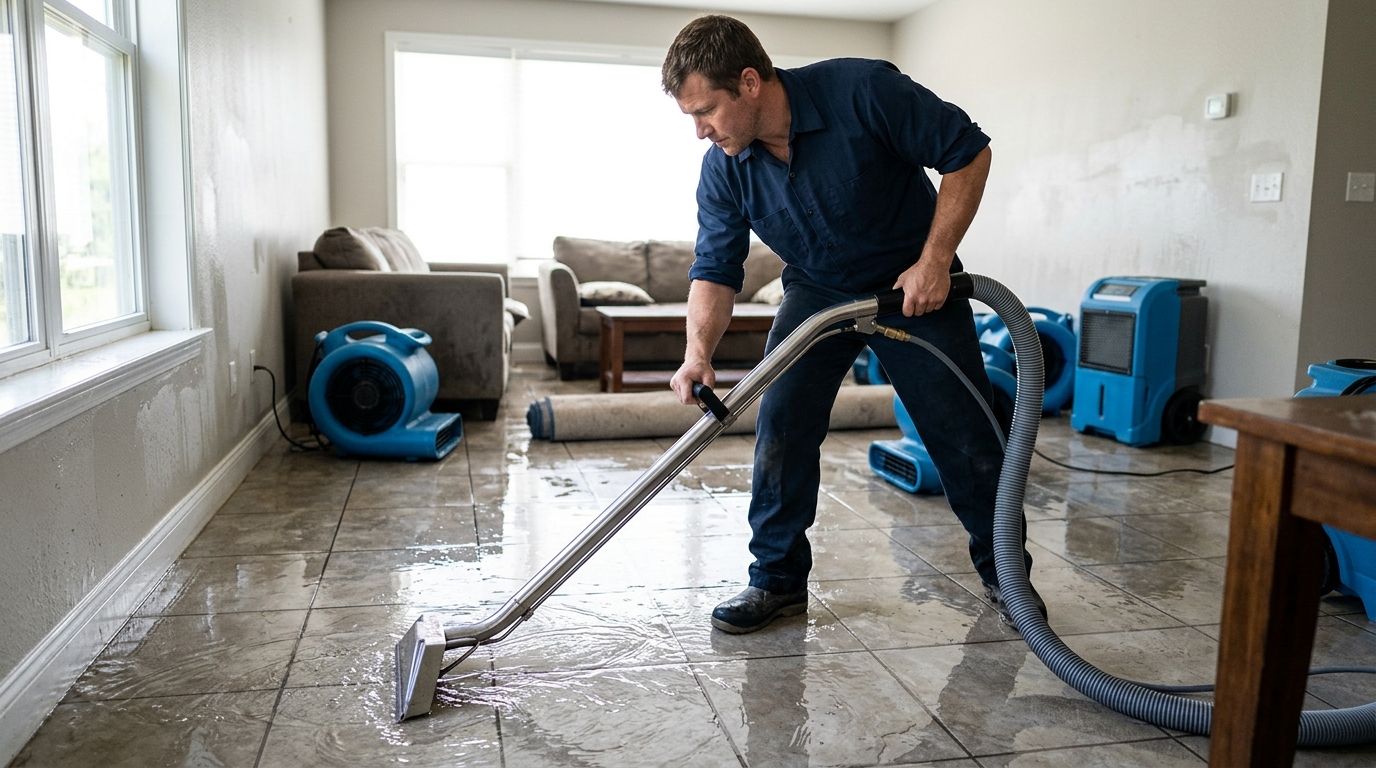
Water on the floor right now in 34608?
- Shut off the water flow at the fixture stop valve or the main water shutoff valve near your home’s exterior or garage.
- Avoid wet electrical equipment, outlets, and cords. Turn off power to flooded rooms from the main electrical panel if safe.
- Do not use a standard shop vacuum on large pools of water without proper electrical grounding and continuous discharge capacity.
- Begin professional water extraction immediately to prevent water from wicking into baseboards and traveling under floor coverings.
Water Extraction & Moisture Control in Spring Hill 34608
The 34608 ZIP code represents the geographic and residential core of Spring Hill. Centered along the major corridors of Mariner Boulevard, Northcliffe Boulevard, Spring Hill Drive, and Deltona Boulevard, 34608 is characterized by high-density residential subdivisions built predominantly between the 1980s and the early 2000s. Nearly all single-family homes in this sector are constructed with monolithic poured concrete slab-on-grade foundations and concrete block stucco (CBS) framing. In these high-density neighborhoods, reliable water extraction service is essential to protect slab foundations and halt hidden moisture movement beneath flooring materials.
When water intrudes into a 34608 residence—whether from a slab leak under tile, an overflowing washing machine, or an attic air-handler condensate backup—the flat concrete slab allows liquid to spread unhindered across multiple rooms. Because Florida homes maintain tight building envelopes, standing water quickly raises indoor humidity, putting ceilings, trim, and wall cavities at risk of secondary moisture damage unless extracted with high-capacity equipment.
Common Water-Loss Scenarios in 34608 Residences
Central Spring Hill properties encounter distinct water-loss patterns related to their building age, foundation construction, and heavy seasonal cooling demands:
- Slab-Related Water Leaks: Copper plumbing lines cast directly into or beneath concrete slabs in 1980s and 1990s homes are subject to friction, soil movement, and pinhole corrosion. Water escaping beneath the slab migrates upward, soaking carpet underlayment and causing warm or wet floor tiles. Learn more about our dedicated slab leak water damage cleanup.
- Major Appliance Failures: High residential density means heavy appliance usage. Failed dishwasher door seals, washing machine supply line ruptures, and refrigerator ice-maker tube splits are leading causes of sudden kitchen and laundry flooding. Explore our appliance leak water damage guidance.
- AC Condensate Drain Overflows: Florida’s unrelenting summer cooling season forces air conditioning systems to extract dozens of gallons of atmospheric moisture daily. When algae or sediment blocks the condensate drain pipe, the drain pan overflows into attics, ceiling drywall, or interior air handler closets. See our AC condensate leak cleanup.
- Water Heater Failures in Attached Garages and Closets: Aging 40- to 50-gallon water heaters frequently suffer bottom tank failure. When pressurized water floods the garage or utility space, it quickly crosses door thresholds into living rooms and bedrooms.
- Toilet Valve and Supply Breakage: Plastic fill valve nuts and aged supply lines can crack unexpectedly under pressure, discharging water across bathrooms and down adjoining hallways while occupants are asleep or away.
Immediate Actions for Water Loss in 34608
Controlling water spread during the initial phase prevents costly structural replacement:
- Cut the Water Flow: Immediately close the fixture angle stop or locate your main residential shutoff valve. If you are unsure where your main shutoff is, refer to our detailed guide on how to shut off your water during a leak.
- Maintain Electrical Caution: Water conducts electricity across tile and laminate floors. Avoid touching light switches, extension cords, or plugged-in appliances in flooded rooms.
- Protect Hardwood and Tile Floor Baseboards: Remove loose rugs, floor mats, and cardboard boxes from the water’s path. Water wicks rapidly through cellulose materials.
- Differentiate Mechanical Repair from Structural Drying: Understand that fixing the broken pipe or valve is only half the battle. While a plumber fixes the pipe, a dedicated water extraction company must extract the pooled water and dry building materials. Read our guide on calling a plumber or water damage company first.
- Call for Rapid Water Extraction: Removing bulk liquid within hours is the single most effective way to save flooring, baseboards, and drywall from permanent swelling and microbial exposure.
The Technical Extraction & Drying Sequence
Our extraction and drying methodology follows scientific psychrometric protocols designed specifically for Florida slab-on-grade homes:
Step 1: Rapid Surface & Sub-Surface Extraction: Using commercial weighted extraction tools and high-cfm vacuum units, we extract liquid water directly from tile grout, concrete pores, and carpet pads. Removing water in liquid form is hundreds of times more efficient than allowing it to evaporate naturally into your home’s air.
Step 2: Non-Invasive Moisture Mapping: We map the complete perimeter of the water loss using non-destructive radio-frequency pinless moisture meters and thermal imaging cameras. Moisture often travels under interior partition walls into adjoining closets and bedrooms without showing visible surface discoloration.
Step 3: Structural Dehumidification Setup: Once liquid extraction is finished, our technicians install commercial low-grain refrigerant (LGR) dehumidifiers and high-velocity axial air movers. The air movers lift boundary moisture off wet surfaces, while the dehumidifiers extract vapor from the air, maintaining a low vapor pressure differential that draws trapped moisture out of drywall and concrete.
Step 4: Daily Psychrometric Monitoring: We inspect drying progress daily, recording temperature, relative humidity, grains per pound (GPP), and material moisture content until all structural assemblies return to verified dry standards.
Where Water Hides in Central Spring Hill Properties
Water intrusion in a 34608 concrete slab home rarely stays where you see it. Common concealed moisture reservoirs include:
- Under Floating Vinyl & Laminate Flooring: Water easily penetrates the click-lock perimeter joints of modern flooring. The waterproof surface traps the liquid beneath, preventing air drying and requiring specialized drying mats or floor removal.
- Behind Baseboards and Base Plates: Water wicks into the bottom edge of drywall and wooden 2×4 sill plates bolted to the slab. Trapped moisture behind vinyl or painted wood baseboards cannot evaporate without intervention.
- Insulation in Lower Wall Cavities: If water level reaches above the baseboard, fiberglass batt insulation inside wall cavities absorbs moisture like a wick, holding moisture against studs.
- Door Frames and Jambs: MDF and solid wood door casings soak up standing water from the bottom, causing bubbling, swelling, and sticking doors within 24 hours.
Related Services in Spring Hill 34608
Comprehensive mitigation services available to 34608 property owners include:
- Water Extraction: Emergency liquid removal from all residential floor types.
- Structural Drying: Scientific material drying for concrete, drywall, and structural framing.
- Moisture Detection: Non-invasive thermal and electronic mapping of moisture migration.
- Slab Leak Cleanup: Targeted water mitigation for below-slab plumbing failures.
- Appliance Leak Cleanup: Rapid water extraction for washing machines, dishwashers, and refrigerators.
Coverage Across the 34608 Area
We provide water extraction services across all central Spring Hill 34608 subdivisions, including properties along Mariner Boulevard, Northcliffe Boulevard, Deltona Boulevard, Spring Hill Drive central, Landover Boulevard, Elgin Boulevard, and surrounding neighborhood streets.
Frequently Asked Questions for 34608 Water Damage
What are the first signs of a slab leak under a 34608 home?
Common symptoms include hot spots on tile floors, persistent dampness or dark discoloration along floor grout lines, damp carpet with no obvious overhead leak, a spinning water meter dial when all fixtures are turned off, and a sudden unexplained spike in your Hernando County water bill.
How long does it take for baseboards to swell from standing water?
Standard MDF (medium-density fiberboard) baseboards can begin swelling and blistering within 2 to 4 hours of standing water contact. Solid wood baseboards tolerate moisture slightly longer but will warp and cup within 12 to 24 hours if water remains trapped behind them.
Can water from an AC leak damage my ceiling and walls?
Yes. When an attic air handler or condensate drain line clogs, water pools in the overflow pan and spills onto the attic floor. It saturates ceiling drywall and insulation, eventually causing ceiling drywall to sag, discolor, or collapse into living areas below.
What should I expect water extraction to cost in Spring Hill?
Extraction costs depend on the volume of water, square footage, affected materials, and whether water was clean, gray, or contaminated. Review our comprehensive breakdown on water extraction costs in Spring Hill, FL for realistic cost factors and insurance guidelines.
Need Water Extracted From Your 34608 Home?
Our specialized extraction units remove standing water quickly to protect your slab, walls, and flooring from long-term damage.