
Water on the floor right now in 34609?
- Isolate the water source using the local fixture valve or your home’s main water shutoff valve.
- Avoid contact with wet electrical equipment, outlets, and power cords. Shut off relevant breakers if safe.
- Do not attempt to extract large pools of water with household vacuums; they present electrical hazards and lack adequate filtration.
- Schedule commercial water extraction immediately before moisture migrates under baseboards, cabinetry, and adjoining rooms.
Dedicated Water Extraction & Drying in Spring Hill 34609
The 34609 ZIP code encompasses the eastern and south-eastern expanse of Spring Hill, stretching along Barclay Avenue, Anderson Snow Road, County Line Road, and the Suncoast Parkway corridor. This sector contains many of Spring Hill’s newer master-planned residential communities, custom single-family homes, and contemporary developments constructed from the late 1990s through recent years. Homes here are predominantly single- and two-story concrete block and frame structures built on concrete slab foundations. Because high-capacity appliances and multi-zone plumbing can discharge substantial volume quickly, immediate water damage extraction stabilizes structural assemblies and prevents saturation from spreading.
Water losses in 34609 frequently involve modern home mechanical systems: whole-house water softeners in garages or utility rooms, multi-zone high-efficiency air conditioning systems, manifold PEX plumbing distribution networks, and large modern appliance suites. When an indoor flood occurs, rapid water extraction is vital to prevent moisture from wicking into modern drywall assemblies, engineered flooring, and custom cabinetry.
Common Water Damage Scenarios in 34609 Properties
Modern residential construction in eastern Spring Hill experiences specific failure modes that require prompt physical water removal:
- Water Softener Tank & Fitting Failures: Hernando County’s hard water makes whole-house water softeners common in 34609 garages. Stuck bypass valves, cracked brine tanks, or dislodged discharge hoses can release hundreds of gallons of water across garage slabs, flowing under demising walls into living areas. Review our guide on water softener leak cleanup.
- High-Tonnage AC Condensate Overflows: Larger modern homes rely on multi-zone or high-tonnage heat pumps operating continuously during Florida summers. Condensate line clogs cause drain pans to overflow into ceiling framing, soaking insulation and drywall. See our AC condensate leak cleanup guidance.
- Roof & Ceiling Storm Intrusion: High winds and heavy tropical downpours during summer squalls can exploit flashing vulnerabilities, ridge vents, or tile transitions, allowing storm water into attic spaces and dripping through ceiling drywall. Explore our ceiling water damage cleanup.
- PEX Plumbing & Manifold Disconnections: Modern PEX plumbing systems utilize central distribution manifolds. Loose crimp rings, thermal expansion stress, or fitting failures can cause pressurized water releases inside wall cavities.
- Kitchen & Laundry Appliance Flooding: High-capacity front-load washing machines, multi-cycle dishwashers, and icemaker water lines are frequent sources of sudden indoor water loss. See our appliance leak response.
First Steps for Homeowners in 34609
Taking immediate, methodical steps reduces structural restoration costs and material loss:
- Shut Down the Water Supply: If a water softener or appliance is leaking, engage its bypass valve or local shutoff. For pipe breaks or unidentified leaks, turn off the main water valve located near the exterior water meter or garage wall.
- Ensure Electrical Safety: Keep family and pets out of standing water. If water has reached floor outlets or baseboard wiring, shut off power from your main electrical panel from a dry location.
- Clear the Water Path: Move loose rugs, paper boxes, decorative furniture, and floor-length drapes out of standing water to dry areas.
- Document the Extent of Damage: Take photographs and video of standing water depth, affected baseboards, swollen door frames, and damaged contents for insurance records.
- Call for Commercial Water Extraction: Fast extraction removes liquid water before it can wick deeply into drywall gypsum, wood sill plates, and concrete subfloors.
Water Extraction & Dehumidification Technology
Effective water damage recovery requires matching equipment capacity to the specific volume and materials of the loss:
High-Volume Surface Extraction: Using specialized truck-mounted and heavy-duty portable extraction equipment, our technicians remove standing water from tile, concrete, and carpet. Deep extraction wands pull water out of carpet padding, preventing the need for destructive removal when clean water is involved.
Sub-Surface Moisture Mapping: We utilize professional moisture meters, pin probes, and infrared cameras to trace water paths behind walls, under cabinets, and across concrete slabs. Even when floor tile appears dry on the surface, moisture meters frequently reveal high saturation beneath the tiles.
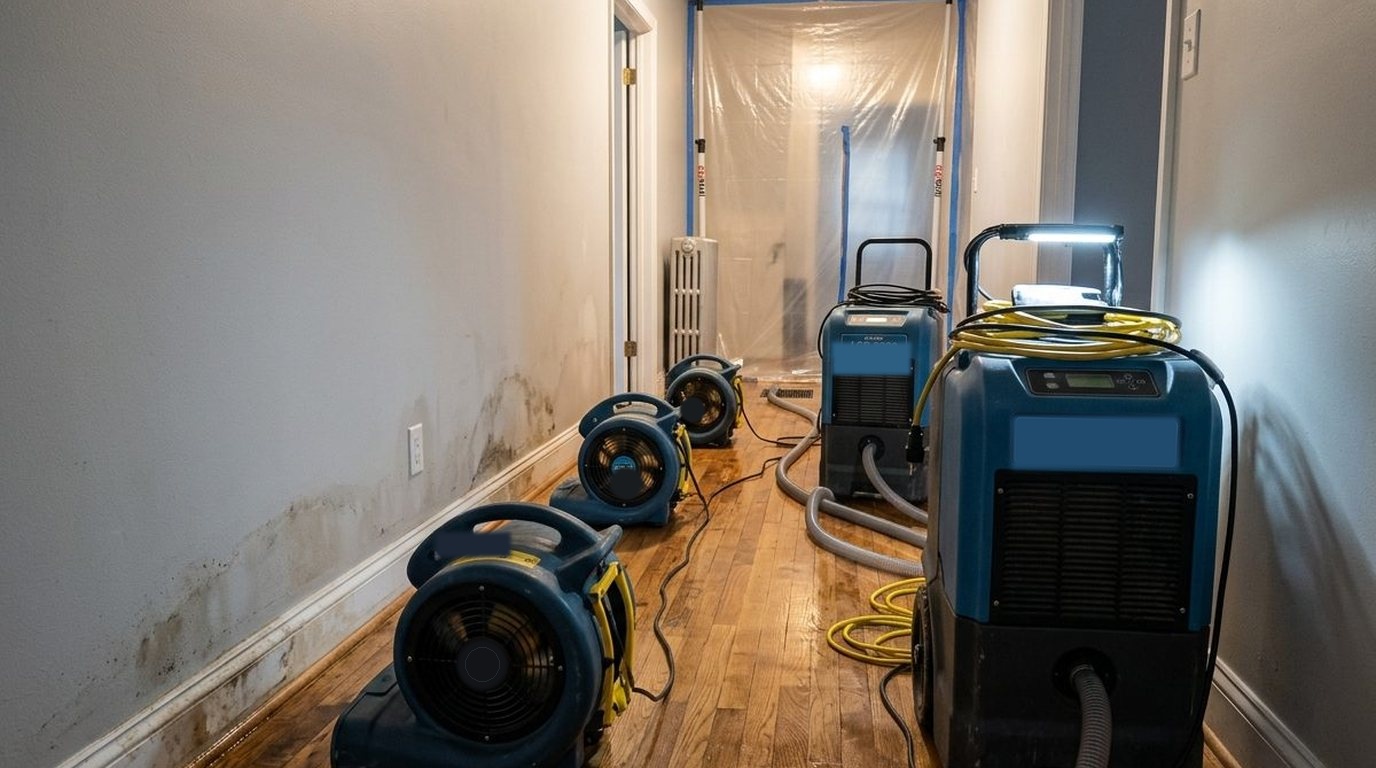
Industrial Structural Drying: We deploy commercial low-grain refrigerant (LGR) dehumidifiers and high-velocity axial air movers. The air movers drive airflow across wet materials, evaporating moisture into the air where LGR dehumidifiers capture and pump it out of the structure as liquid condensation.
Where Moisture Hides in 34609 Homes
Modern homes with complex architectural layouts offer numerous concealed cavities where moisture can linger undetected:
- Between Concrete Slabs and Luxury Vinyl Plank (LVP): LVP creates a waterproof barrier from above, but water flowing beneath perimeter baseboards gets trapped against the slab, causing adhesive breakdown and persistent dampness.
- Behind Baseboards and Drywall Cavities: Water wicks upward through porous gypsum board, reaching heights of 12 to 24 inches within hours. Saturated insulation inside interior walls holds moisture against wood and steel studs.
- Under Kitchen Islands and Bathroom Vanities: Modern cabinetry installed over unsealed subfloors traps water beneath toe-kicks, warping particle board and creating hidden pockets of high humidity.
- Door Casing and Base Trim: Trim absorbs water through unsealed bottom edges, expanding and separating from wall surfaces.
Related Services for East Spring Hill 34609
Comprehensive water damage restoration services available to 34609 properties include:
- Emergency Water Extraction: Fast, thorough removal of pooled water from all interior surfaces.
- Structural Drying: Scientific material drying using commercial LGR dehumidifiers and air movers.
- Moisture Detection: Non-invasive thermal and electronic moisture tracking.
- Water Softener Leak Cleanup: Targeted water extraction and garage-to-interior drying.
- AC Condensate Leak Cleanup: Ceiling and closet extraction following air handler overflow.
Local Service Coverage Across 34609
We provide water extraction and drying services throughout eastern Spring Hill 34609, including properties along Barclay Avenue, Anderson Snow Road, Spring Hill Drive east, County Line Road, Shady Hills borders, and surrounding residential subdivisions.
Frequently Asked Questions for 34609 Water Losses
What should I do if my water softener floods my garage and spreads inside?
First, push the bypass valve on the water softener to stop incoming water, or shut off the main water valve. Keep garage doors closed during high humidity to avoid drawing outdoor moisture in. Call for commercial water extraction immediately so technicians can extract water from the garage slab and install drying equipment along interior partition walls.
Can water under luxury vinyl plank (LVP) dry without removing the floor?
Because LVP flooring is virtually impermeable to water vapor, moisture trapped beneath it cannot evaporate freely through the surface. In many cases, sections of LVP must be carefully lifted to extract trapped water and allow the concrete slab underneath to dry thoroughly, preventing adhesive failure and mold growth.
How long does structural drying take for a 34609 home?
While physical extraction of standing water is completed within hours, structural drying of saturated concrete slabs, drywall, and wood framing typically requires 3 to 5 days of continuous commercial dehumidification and air movement. Learn more in our article on how long water damage takes to dry.
Will my insurance cover water damage from a failed appliance or softener?
Most standard homeowners policies cover sudden and accidental discharges of water from appliances, plumbing systems, and softeners. Gradual leaks that occur over weeks or months are typically excluded. Review our guide on Florida homeowners insurance water damage for documentation best practices.
Need Water Extracted From Your 34609 Property?
Our specialized extraction equipment removes standing water rapidly to protect your slab, walls, and flooring from secondary damage.