
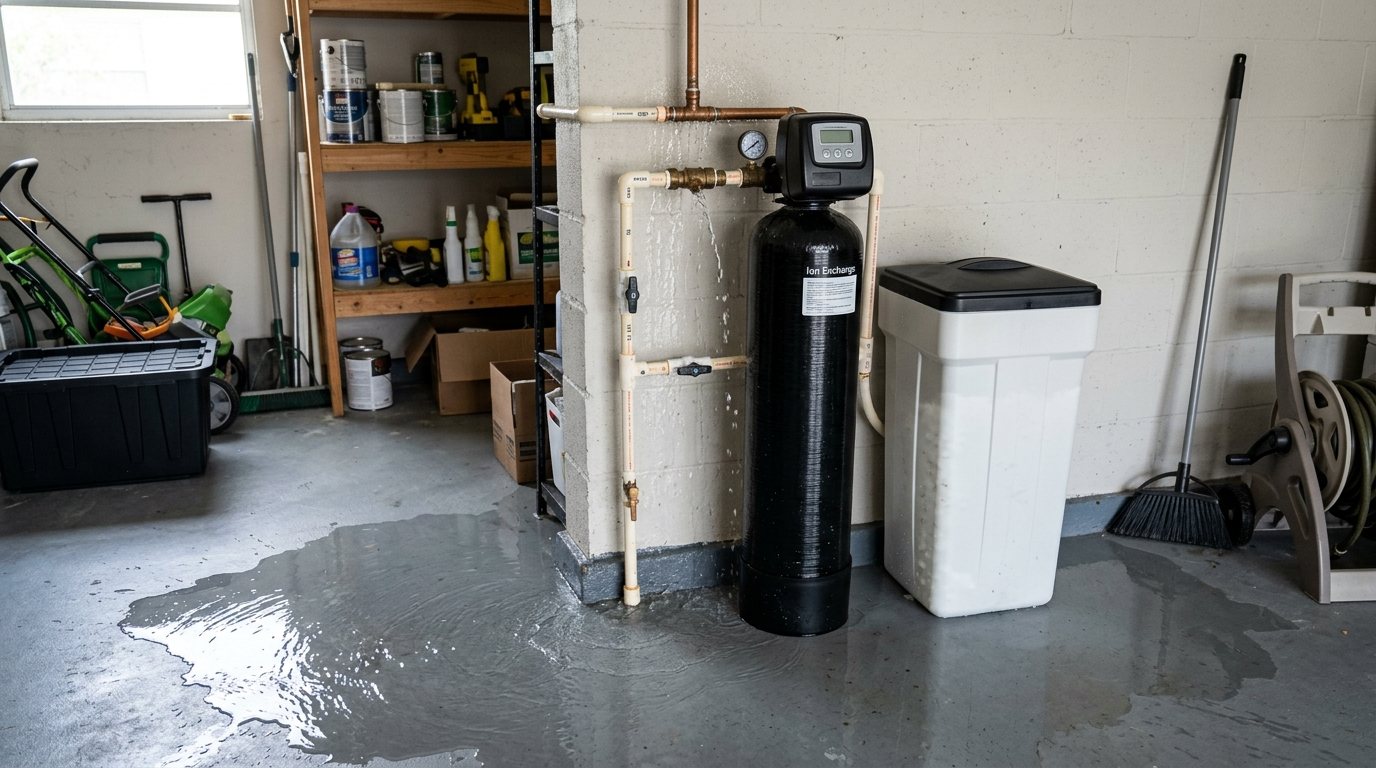
What to Do First When a Water Softener Leaks
If your water softener is leaking or overflowing, immediately engage the system’s bypass valve or shut off the main water supply valve to stop incoming flow. Stay clear of electrical cords and power outlets around the unit. Do not walk through pooled water in your garage or utility room without sturdy shoes. Remove dry stored belongings out of the water path and arrange commercial water extraction before standing water crosses the garage threshold into interior drywall and living spaces.
Water Softener Leaks in Spring Hill & Hernando County Homes
Due to the limestone geology of western Florida, groundwater throughout Spring Hill and Hernando County is notably hard, containing high concentrations of dissolved calcium and magnesium. Consequently, a vast majority of single-family homes in Spring Hill—especially in newer communities across 34609 and central 34608—utilize whole-house water softeners. These units are typically installed in attached garages, utility closets, or exterior equipment alcoves.
A water softener operates under continuous household water pressure (typically 50 to 70 PSI) and cycling regeneration programs. When an internal component, valve, or tank fails, the unit can discharge hundreds of gallons of water within a few hours. In a garage setting, standing water spreads rapidly across the smooth concrete floor, soaking exterior wall sill plates, drywall, and migrating across the interior door threshold into laundry rooms, hallways, and living areas.
Common Causes of Water Softener Flooding
Water softener failures usually stem from mechanical fatigue, pressure surges, or salt corrosion within the unit’s assemblies:
- Brine Tank Overflow: The brine tank stores concentrated salt brine used to regenerate the ion-exchange resin. If the brine safety float valve fails to seat properly or the brine line clogs, water continues flowing into the tank during the refill cycle until it spills over the rim.
- Cracked Bypass Valve & Pipe Fittings: The bypass valve assembly connects the softener to the home’s main water line. Plastic bypass bodies and threaded fittings can crack from mechanical stress, vibration, or thermal expansion, resulting in a continuous high-pressure spray.
- Resin Tank Rupture or Cracking: The pressurized fiberglass resin tank can crack under pressure spikes or age-related material fatigue, discharging dozens of gallons of water mixed with ion-exchange resin beads.
- Dislodged or Kinked Drain Line: During regeneration, the softener flushes wash water through a discharge line into a drain or utility sink. If this line slips out of the drain receptacle or ruptures under discharge pressure, gallons of backwash water flood the room.
- Rotor Valve & Control Head Failure: The motorized control valve head regulates backwash, brine draw, and rinse cycles. If the internal seals wear out or the motor jams mid-cycle, the unit can become stuck in a continuous rinse or fill cycle.
Garage to Interior Water Migration: The Hidden Danger
Homeowners often assume a water softener leak is contained because the unit is situated in a garage. However, Florida building construction creates specific pathways for water to invade the home’s interior:
Threshold Penetration: Most garage slabs are only slightly recessed below the interior living floor slab. When water pools several inches deep or flows against the interior entryway door, it seeps under the weatherstripping, threshold, and door framing directly into the home.
Drywall & Sill Plate Wicking: The partition wall dividing the garage from the living room is framed with wood sill plates and drywall. When water stands on the garage floor, the drywall and wood absorb water like a sponge, drawing moisture through the wall cavity and damaging baseboards and flooring on the finished interior side.
Corrosive Salt Brine Exposure: If the leak involves water from the brine tank, the water contains high concentrations of dissolved sodium or potassium chloride. Saltwater accelerates the corrosion of metal studs, electrical conduit, fasteners, and framing plates, and leaves hygroscopic salt residues that attract atmospheric moisture long after liquid water is removed.
Immediate Action Steps for Homeowners
If your water softener is actively leaking, take these immediate steps to mitigate damage:
- Engage the Bypass Valve: Most water softeners feature a valve with two handles or a push-plunger behind the control head. Turn both handles perpendicular or push the plunger in to bypass the unit, allowing municipal water to flow to the home while isolating the softener.
- Shut Off the Main Water Line if Needed: If the bypass valve is cracked or leaking itself, immediately shut off your home’s main water shutoff valve. Refer to our guide on how to shut off water during a leak.
- Disconnect the Power Supply Safely: Unplug the water softener’s electrical transformer from the wall outlet if you can reach it from a completely dry location. Never step into standing water to reach an electrical plug.
- Protect Stored Belongings: Move cardboard boxes, power tools, lawn equipment, and storage containers off the wet garage floor to prevent water absorption and mold.
- Call for Commercial Water Extraction: Removing standing water quickly prevents liquid from penetrating interior drywall and settling beneath living-area floor coverings.
Water Extraction & Decontamination Protocol
Our water damage technicians follow a rigorous cleanup and drying protocol for water softener losses:
1. Liquid Extraction: High-powered extraction units pump out standing water from garage concrete and extract liquid that has crossed into interior carpets, laminate, or tile.
2. Salt Residue Rinsing & Decontamination: If brine water is involved, affected surfaces are thoroughly rinsed and treated with neutral sanitizing agents to remove corrosive salt deposits that could damage building materials.
3. Wall Cavity Moisture Inspection: Using non-invasive digital moisture meters, we inspect both the garage and interior sides of shared partition walls, identifying how far water has wicked upward through drywall and sill plates.
4. Structural Dehumidification: Commercial low-grain refrigerant (LGR) dehumidifiers and high-velocity air movers are installed to pull moisture out of concrete slabs, wall cavities, and framing, restoring materials to safe equilibrium moisture standards.
Important Scope Note: Our company specializes strictly in water damage mitigation, extraction, and structural drying. We do not sell, install, or perform mechanical plumbing repairs on water softener equipment. Homeowners should consult a licensed water filtration specialist or plumber for equipment repair or replacement once the area is dry.
Where Moisture Hides After a Softener Leak
Water from a softener leak often migrates into places that are invisible during a casual walkthrough:
- Inside Shared Garage-to-Living-Room Walls: Moisture wicks into lower drywall and insulation inside the demising wall, remaining damp long after the garage floor appears dry.
- Under Adjoining Interior Flooring: Water that slips under the garage threshold flows beneath floating vinyl plank (LVP), laminate, or carpet in adjoining laundry rooms and hallways.
- Behind Baseboards and Cabinets: Garage storage cabinets, water heater stands, and interior baseboards trap water underneath and against walls.
Related Services for Water Softener Flooding
Coordinated services available to property owners facing water softener failures include:
- Emergency Water Extraction: Fast liquid removal from garage concrete and interior living floors.
- Structural Drying: Industrial dehumidification to thoroughly dry concrete slabs and wall framing.
- Moisture Detection: Electronic moisture mapping of shared walls and subfloor assemblies.
- Water Contamination Guide: Understanding clean, gray, and brine water classifications.
Frequently Asked Questions About Water Softener Leaks
Is water from a leaking water softener considered contaminated?
Water from the incoming municipal supply line before it enters the brine cycle is clean (Category 1). However, water that has overflowed from the brine tank or backwash drain line contains high salt concentrations, mineral sediments, and potential bacterial buildup, categorizing it as Category 2 (gray water). It requires proper sanitary handling and cleaning.
Can standing water in a garage damage my home’s interior?
Yes. Because garage slabs are level or only slightly lower than interior floor slabs, standing water quickly reaches the threshold and wicks into the shared partition wall. Drywall and wood framing absorb water rapidly, causing mold growth and structural dampness on the finished interior side.
Do I need to replace drywall affected by a water softener leak?
If clean water was extracted promptly and the drywall remains structurally sound without mold, it can frequently be dried in place using commercial dehumidifiers and injected airflow. If the drywall was saturated with heavy brine water, stayed wet for over 48 hours, or shows signs of mold or crumbling, selective bottom removal (flood cut) is typically recommended.
Dealing With a Leaking Water Softener in Spring Hill?
Our specialized extraction units remove standing water quickly from garages and interior living spaces to protect your property from secondary damage.